
Keeping your home comfortable in Central Texas can be expensive, especially during the long, hot summers. Smart thermostats offer a simple way to manage your home’s temperature, reduce wasted energy, and potentially lower your monthly utility bills.
With features like automatic scheduling, remote access, and energy usage reports, these devices make it easier to stay comfortable without constantly adjusting the temperature. Here’s how smart thermostats work, why they’re worth considering, and how to choose the right one for your home.
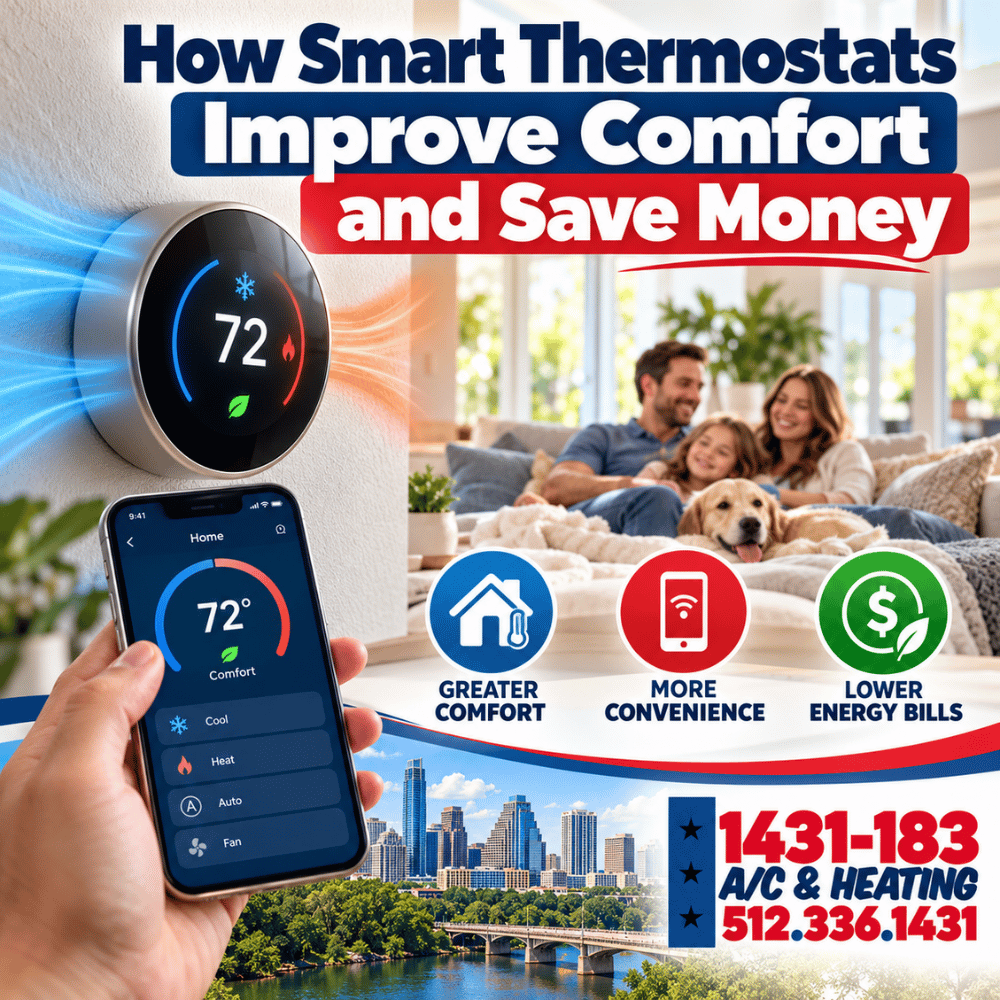
What Is a Smart Thermostat, and How Does It Work?
If you’ve ever forgotten to adjust your thermostat before leaving for work or returned home to a house that feels like an oven, you know how frustrating temperature control can be.
Traditional thermostats require you to make most adjustments manually. Programmable thermostats let you set a schedule, but they often lack the flexibility needed for changing routines.
A smart thermostat takes things further.
Smart thermostats connect to your home’s Wi-Fi network, allowing you to control your air conditioning and heating system through a smartphone, tablet, or compatible smart home device.
Many models also learn your daily habits and automatically adjust temperatures based on your schedule and preferences.
For example, a smart thermostat might recognize that your family leaves for work and school around 8 a.m. It can adjust the temperature while everyone is away and begin cooling the house before you return.
The result is a home that stays comfortable when you need it without wasting energy when you don’t.
How Smart Thermostats Help Lower Energy Bills
One of the biggest reasons homeowners consider upgrading to a smart thermostat is the potential for energy savings.
In Central Texas, air conditioning often accounts for a significant portion of a household’s electricity use. Even small improvements in how your cooling system operates can make a difference over time.
Here’s how smart thermostats help reduce unnecessary energy consumption.
1. Automatic Temperature Scheduling
Smart thermostats allow you to create schedules that match your family’s routine.
Instead of running your air conditioner at the same temperature all day, you can automatically adjust it when nobody is home.
For example, during the summer, you might set your thermostat to:
- 76°F when your family is home.
- 80°F while everyone is at work or school.
- 76°F shortly before everyone returns.
- 77°F overnight, depending on your sleeping preferences.
These are examples, not required settings. The best temperatures depend on your comfort needs, your home, and your cooling system.
By reducing cooling demands during certain hours, your air conditioner may use less electricity.
2. Learning Your Household’s Routine
Some smart thermostats use learning technology to recognize patterns in your daily schedule.
Over time, they may automatically adjust temperatures based on when you typically wake up, leave home, return, and go to bed.
This feature can be especially helpful for busy families who don’t want to constantly manage thermostat settings.
However, not every smart thermostat offers automatic learning. Some models rely on schedules you create yourself.
3. Reducing Energy Waste When Nobody Is Home
Many smart thermostats include occupancy sensing or location-based features.
Depending on the model, the thermostat can detect whether someone is home or use your smartphone’s location to help determine when the house is empty.
When everyone leaves, the thermostat can automatically adjust to an energy-saving temperature.
When someone returns, it can restore your preferred comfort settings.
This can help prevent your air conditioner from cooling an empty house more than necessary.
4. Tracking Energy Usage
Some smart thermostats provide reports showing how often your heating and cooling system runs.
These reports may help you identify patterns such as:
- Higher cooling demands during extremely hot weather.
- Increased system operation after changing temperature settings.
- Opportunities to adjust your daily schedule.
- Unusual changes in heating or cooling activity.
While these reports don’t always measure actual electricity consumption, they can help you understand how your system operates and make smarter decisions.
How Much Money Can a Smart Thermostat Actually Save?
The amount you save depends on several factors, including your home’s insulation, thermostat settings, electricity rates, and how often your family is home.
ENERGY STAR reports that certified smart thermostats are independently evaluated for demonstrated energy savings. Actual savings vary by household.
Some manufacturers advertise average savings of around 10% to 15% on heating and cooling costs, but those figures should not be treated as a guarantee.
Here’s a simple example of how savings might add up.
| Monthly heating and cooling cost | Estimated 10% savings | Annual savings |
|---|---|---|
| $100 | $10 | $120 |
| $150 | $15 | $180 |
| $200 | $20 | $240 |
| $250 | $25 | $300 |
These are hypothetical examples based on a 10% reduction in heating and cooling expenses, not your entire electricity bill.
For homeowners in Round Rock, Georgetown, Cedar Park, and surrounding communities, the potential savings can make a smart thermostat a worthwhile investment over time.
However, homeowners who already use an efficient programmable thermostat and maintain consistent energy-saving settings may see smaller improvements.
Smart Thermostats Can Make Your Home More Comfortable
Saving money is important, but comfort matters just as much.
Nobody wants to walk into a hot house after spending the day outside in the Texas heat.
Smart thermostats offer several features that can make your home more comfortable without requiring constant attention.
Control Your Temperature From Anywhere
Imagine you’re returning from a weekend trip to Lake Travis.
Instead of arriving home to an uncomfortable house, you can use your smartphone to adjust the temperature before you leave.
By the time you arrive, your home can already be cooling down.
Remote access is also helpful when your schedule changes unexpectedly. If you’re working late or returning home earlier than planned, you can adjust your thermostat from almost anywhere with an internet connection.
Maintain More Consistent Temperatures
Some smart thermostats use advanced scheduling and temperature sensors to improve comfort throughout the day.
Certain models support additional room sensors that help monitor temperatures in different areas of your home.
For example, if your upstairs bedroom is warmer than your downstairs living room, compatible sensors may help your thermostat prioritize the bedroom during sleeping hours.
However, a smart thermostat cannot fix every temperature imbalance. Problems caused by poor insulation, blocked vents, or improperly designed ductwork may still require professional attention.
Adjust Temperatures Before You Wake Up
Nobody enjoys getting out of a warm bed on a cold winter morning.
With a smart thermostat, you can schedule your heating system to begin warming your home before your alarm goes off.
Likewise, during summer, you can schedule cooling adjustments to make your bedroom more comfortable before bedtime.
These small conveniences can make a noticeable difference in your daily routine.
Are Smart Thermostats Worth It in Central Texas?
For many Central Texas homeowners, smart thermostats offer practical benefits because of our changing weather conditions.
Summers in Williamson County can bring weeks of intense heat, while winter cold fronts sometimes arrive with little warning.
A smart thermostat helps you manage these temperature changes more conveniently.
Here are three situations where upgrading may be especially useful.
Busy households with changing schedules: If your family frequently comes and goes at different times, automatic temperature adjustments can help reduce unnecessary cooling and heating.
Homeowners who travel frequently: Whether you’re leaving for a weekend or an extended vacation, remote access lets you monitor and adjust your home’s temperature.
Families concerned about rising electricity bills: Smart thermostats can help you identify opportunities to reduce energy use without making major changes to your daily routine.
For many households, the combination of convenience, comfort, and potential energy savings makes upgrading worth considering.
What Features Should You Look for in a Smart Thermostat?
Not all smart thermostats offer the same capabilities.
Before purchasing one, consider which features would be most helpful for your household.
| Feature | Why It Matters |
|---|---|
| Wi-Fi connectivity | Allows remote temperature control through a smartphone |
| Automatic scheduling | Adjusts temperatures around your daily routine |
| Learning technology | Can adapt settings based on household habits |
| Energy reports | Helps you understand heating and cooling activity |
| Room temperature sensors | May improve comfort in selected areas |
| Smart home compatibility | Allows integration with compatible voice assistants |
| Maintenance reminders | Helps you remember filter changes and system maintenance |
| ENERGY STAR certification | Identifies models that meet recognized energy-saving criteria |
For homeowners focused on lowering electricity costs, automatic scheduling and energy-saving features should be high priorities.
For families dealing with uneven temperatures, compatible room sensors may be especially useful.
Will a Smart Thermostat Work With Your Existing Air Conditioning and Heating System?
This is one of the most important questions to answer before buying a smart thermostat.
While many smart thermostats work with common residential heating and cooling systems, not every model is compatible with every setup.
Compatibility depends on factors such as:
- Whether your home uses a heat pump or a traditional air conditioning and heating system.
- The number of heating and cooling stages your equipment supports.
- Whether your thermostat wiring includes a common wire, often called a C-wire.
- Whether your system uses standard thermostat controls or proprietary equipment.
- Whether you have additional equipment, such as a whole-home humidifier or dehumidifier.
Some smart thermostats require a C-wire to provide continuous electrical power. Others can operate without one or use an approved adapter.
Installing an incompatible thermostat can cause operating problems or potentially damage equipment.
That’s why having a qualified air conditioning and heating technician verify compatibility before installation is a smart decision.
Can You Install a Smart Thermostat Yourself?
Some smart thermostats are designed for homeowner installation, particularly when replacing a basic thermostat with compatible wiring.
However, installation isn’t always as simple as removing the old thermostat and connecting a few wires.
Incorrect wiring can prevent your heating and cooling system from operating properly.
Certain systems, including multi-stage equipment and heat pumps, may require additional configuration.
Professional installation helps ensure that:
- Your thermostat is compatible with your equipment.
- Wiring connections are correct.
- Heating and cooling settings are properly configured.
- Smart features work as intended.
- Your system responds correctly to temperature adjustments.
A technician can also explain how to use your thermostat’s features so you get the most value from your investment.
Smart Thermostats Work Best With a Well-Maintained System
A smart thermostat can help your heating and cooling equipment operate more efficiently, but it cannot correct underlying mechanical problems.
If your air conditioner has a dirty filter, low refrigerant, restricted airflow, or worn components, changing the thermostat won’t solve those issues.
For example, imagine a homeowner in Leander installs a smart thermostat hoping to reduce unusually high summer electricity bills.
The new thermostat improves scheduling, but the air conditioner continues running for long periods because the outdoor condenser coil is dirty.
Until that maintenance issue is addressed, the homeowner may not experience the savings they expected.
That’s why smart thermostat upgrades and regular air conditioning maintenance work well together.
A properly maintained system can respond more effectively to thermostat settings, maintain comfortable temperatures, and reduce unnecessary energy consumption.
Why Choose 1431-183 A/C & Heating for Your Thermostat Needs?
Choosing the right smart thermostat is only part of the process. Making sure it works properly with your existing equipment is equally important.
At 1431-183 A/C & Heating, we help Central Texas homeowners make informed decisions about their air conditioning and heating systems.
As a locally owned and operated company with 20 years of experience, we understand the challenges of keeping homes comfortable through our hot summers and unpredictable winter weather.
We believe homeowners deserve straightforward recommendations, honest pricing, and dependable service without unnecessary upselling.
Whether you’re considering a smart thermostat upgrade, experiencing temperature problems, or simply looking for ways to improve efficiency, our team can help you understand your options.
We proudly serve homeowners throughout Round Rock, Georgetown, Cedar Park, Leander, Liberty Hill, North Austin, and surrounding Williamson County communities.
Frequently Asked Questions About Smart Thermostats
1. Do smart thermostats really lower electricity bills?
Yes, smart thermostats can lower electricity bills by reducing unnecessary heating and cooling. Features like automatic scheduling, occupancy detection, and remote temperature adjustments can help your system use less energy. However, actual savings depend on your home’s efficiency, existing thermostat habits, and how you use the device.
2. Can a smart thermostat damage my air conditioner?
A properly installed, compatible smart thermostat should not damage your air conditioner. However, incorrect wiring or improper configuration can create problems. Some systems require special thermostat settings or equipment compatibility checks. Professional installation can help prevent these issues.
3. Is a smart thermostat worth buying if I already have a programmable thermostat?
It depends on how you use your current thermostat. If you already follow an effective energy-saving schedule, a smart thermostat may provide only modest additional savings. However, remote access, automatic adjustments, energy reports, and other convenience features may still make the upgrade worthwhile.
Start Saving Energy and Enjoying Better Comfort Today
Your thermostat plays an important role in how comfortable your home feels and how much energy your air conditioning and heating system uses.
Upgrading to a smart thermostat can make temperature control easier, help reduce unnecessary energy consumption, and give you greater control over your home’s comfort.
But choosing the right thermostat and making sure it works with your existing equipment are important steps.
At 1431-183 A/C & Heating, we’re here to help you make the right decision for your home and budget.
Whether you need help choosing a smart thermostat, checking system compatibility, or improving your air conditioning and heating efficiency, you can count on our experienced local team.
Call now at (512) 336-1431 to discuss your thermostat options or schedule service.
Visit 1431AC.com to learn more about our air conditioning and heating services throughout Central Texas.
