
A dirty air conditioning and heating system can affect more than your comfort. Dust, pollen, pet dander, mold, and other particles can collect inside your system and move through your home every time the air turns on. For some homeowners, that can mean more coughing, sneezing, irritated eyes, headaches, or allergy symptoms.
The good news is that regular maintenance, clean filters, and prompt attention to moisture problems can help improve indoor air quality. If your home feels dusty, smells musty, or seems to make allergy symptoms worse, it may be time to have your system inspected.
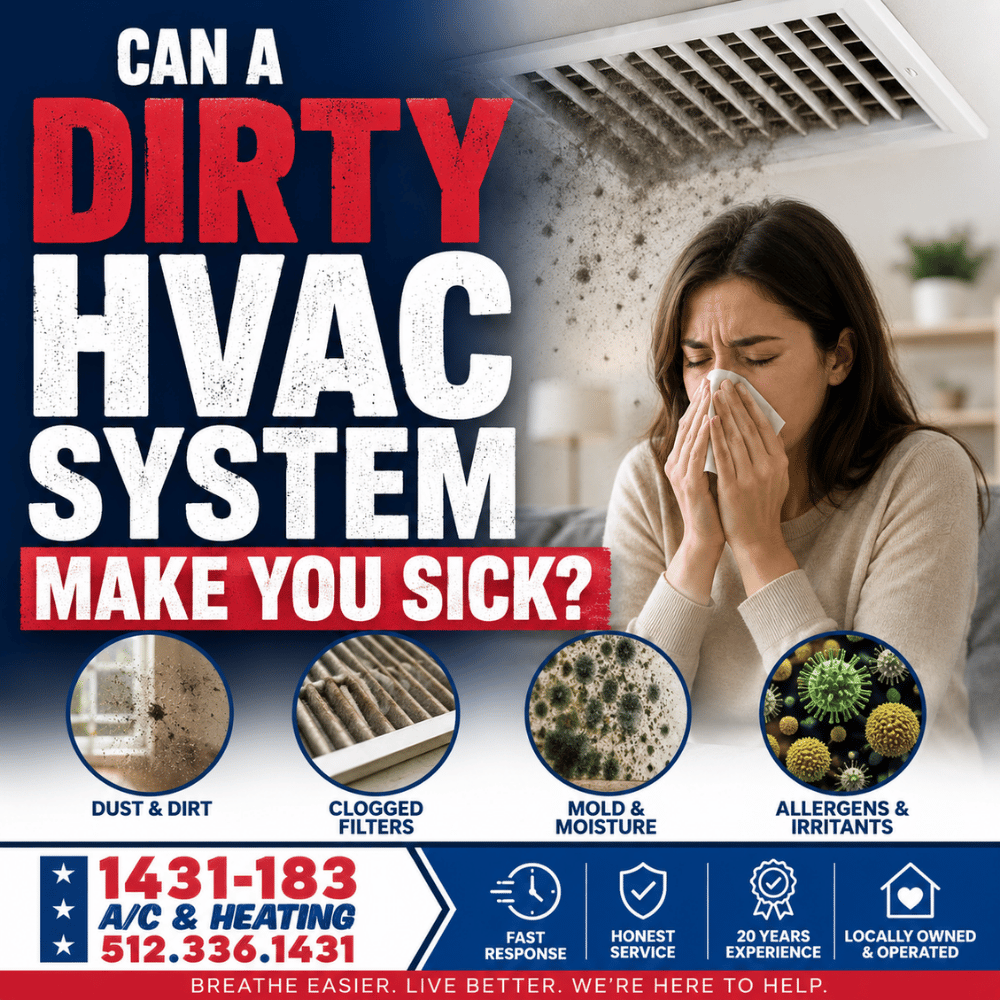
Can a Dirty HVAC System Make You Sick?
Yes, a dirty air conditioning and heating system can contribute to poor indoor air quality and may make some people feel sick or uncomfortable.
Your system constantly pulls air from inside your home, conditions it, and sends it back through the rooms. If dust, allergens, moisture, or other contaminants build up in the system, some of those particles can circulate with the air.
That does not mean every sneeze or headache is caused by your air conditioner. Many things can affect how you feel. But if symptoms seem worse when you are at home or when your system is running, your indoor air quality deserves a closer look.
What Can Build Up Inside an Air Conditioning System?
Central Texas homes deal with plenty of airborne particles throughout the year. Pollen, dust, pet hair, and outdoor debris can all find their way indoors.
Over time, your system may collect:
- Dust and dirt
- Pollen
- Pet dander
- Mold spores
- Bacteria
- Hair and lint
- Smoke particles
- Other airborne debris
Your air filter catches many of these particles before they travel through the system. But a clogged filter cannot do its job as well.
Dust can also collect on important parts of the system, including the indoor coil and blower components. When dirt combines with moisture, conditions may become more favorable for unwanted biological growth.
What Symptoms Can Poor Indoor Air Quality Cause?
Dirty indoor air can affect people differently. Someone with allergies or asthma may notice problems much sooner than someone without those conditions.
Possible signs of poor indoor air quality include:
- Sneezing
- Coughing
- Stuffy or runny nose
- Itchy or watery eyes
- Scratchy throat
- Headaches
- Increased allergy symptoms
- Breathing irritation
- Unusual tiredness
These symptoms can have many possible causes, so you should not assume your air conditioning system is responsible. However, if several people in your home notice similar symptoms or they improve after leaving the house, indoor air quality may be worth investigating.
Anyone experiencing serious or ongoing health symptoms should speak with a qualified medical professional.
Can Mold Grow Inside Your Air Conditioning System?
Mold needs moisture to grow, and air conditioning systems naturally remove moisture from indoor air.
Under normal conditions, that moisture drains away safely. Problems can develop when water doesn’t drain properly or parts of the system remain damp.
Possible trouble spots include:
- Clogged condensate drain lines
- Dirty indoor coils
- Drain pans
- Areas around air handlers
- Damp insulation
- Ductwork exposed to excessive moisture
A persistent musty smell when the air conditioner turns on can be a warning sign that moisture or biological growth may be present.
Do not simply cover the smell with air fresheners. Finding the moisture source is more important.
A Dirty Air Filter Can Cause More Problems Than You Think
The air filter is one of the simplest parts of your system, but it plays an important role.
A clean filter helps trap particles before they circulate through your home or collect inside your equipment.
When the filter becomes clogged, airflow can drop. Your system may have to work harder, and more dirt may begin collecting where you do not want it.
A severely dirty filter can contribute to:
- Poor airflow
- Higher energy bills
- Uneven temperatures
- Extra strain on the system
- Increased dust inside the home
- Reduced indoor air quality
- Frozen indoor coils in some situations
For many Central Texas homeowners, checking the filter once a month is a good habit. How often you actually need to replace it depends on your home, filter type, pets, allergies, and how much your system runs.
Why Central Texas Homes Can Get Dusty So Quickly
Homeowners in Round Rock, Georgetown, Cedar Park, Leander, Liberty Hill, and North Austin know how quickly outdoor conditions can change.
Our area deals with heavy pollen seasons, dry periods, construction dust, wind, and long stretches of hot weather. During the summer, air conditioners may run for many hours every day.
That means a system that is already dirty can keep circulating air through the home again and again.
Homes with pets, frequent door traffic, remodeling projects, or nearby construction may notice even more dust.
Regular maintenance becomes especially important when your cooling system works almost nonstop through a Central Texas summer.
Does Dirty Ductwork Make You Sick?
Dirty ductwork can sometimes contribute to indoor air quality problems, but ducts do not automatically need to be cleaned just because they contain a little dust.
The bigger concern is when there is evidence of a specific problem, such as:
- Visible mold growth
- Rodent or insect contamination
- Heavy debris buildup
- Unusual odors
- Construction debris
- Moisture inside the duct system
If you see dust around your vents, the problem may also be coming from poor filtration, air leaks, or dirt elsewhere in the system.
A technician should identify the cause before recommending a solution. You should not have to pay for services you do not actually need.
How Regular Maintenance Helps Protect Indoor Air Quality
Routine air conditioning and heating maintenance is not just about preventing breakdowns.
A professional inspection can also catch conditions that may affect your indoor air.
During a maintenance visit, a technician may inspect or address things such as:
- Air filters
- Indoor coils
- Drain lines
- Drain pans
- Blower components
- Airflow
- Visible dirt or debris
- Signs of excess moisture
Cleaning dirty components and correcting drainage problems can help your system move air more effectively while reducing conditions that allow contaminants to build up.
Maintenance also gives you a chance to catch small problems before they become expensive repairs.
Signs Your System May Need Professional Attention
You do not have to wait until the air conditioner stops working.
Call for service if you notice:
- A musty smell from the vents
- More dust than usual
- Weak airflow
- A filter that becomes dirty very quickly
- Water around the indoor equipment
- Unexplained increases in allergy symptoms
- Visible mold-like growth near vents or equipment
- Unusual humidity inside the home
- Rooms that feel stuffy even when the system is running
These symptoms do not always mean you have a serious indoor air quality problem. They do mean it is worth finding out what is happening.
What Homeowners Can Do to Keep Their System Cleaner
You can reduce a lot of indoor air problems with a few simple habits.
Check your air filter regularly and replace it when it becomes dirty. Keep return air vents clear of furniture and clutter. Vacuum around registers and returns. Watch for water around your indoor equipment.
It also helps to schedule regular professional maintenance.
If you have pets, allergies, a recent remodeling project, or unusually dusty conditions around your home, you may need to pay even closer attention to filtration and system cleanliness.
Most importantly, do not ignore moisture. A small drainage problem can become a much bigger issue if it’s allowed to continue.
When Should You Call 1431-183 A/C & Heating?
If your home smells musty, feels unusually dusty, or seems uncomfortable even though the air conditioner is running, you should not have to guess what is causing the problem.
1431-183 A/C & Heating can inspect your air conditioning and heating system, explain what we find in plain language, and recommend only the work that makes sense.
We are locally owned and operated, with 20 years of experience serving Central Texas homeowners. We believe in upfront pricing, honest recommendations, and no unnecessary upselling.
Whether you are in Round Rock, Georgetown, Cedar Park, Leander, Liberty Hill, or North Austin, our goal is simple: help you get your home comfortable again and feel confident about the solution.
Frequently Asked Questions
Can a dirty air conditioner cause coughing?
A dirty system may contribute to coughing if dust, pollen, mold spores, or other irritants are circulating through your home. Coughing can also have many other causes, so persistent symptoms should be discussed with a medical professional.
How often should I change my air filter?
Many homeowners should check their filter about once a month. Some filters may last longer, while homes with pets, allergies, heavy dust, or frequent air conditioner use may need more frequent replacement. Check the manufacturer’s recommendations and replace the filter when it becomes visibly dirty.
Will air conditioning maintenance improve indoor air quality?
It can help. Maintenance allows a technician to inspect filters, coils, drains, airflow, and other parts of the system that can collect dirt or moisture. It will not solve every indoor air quality issue, but keeping the system clean and operating properly is an important part of maintaining healthier indoor air.
Breathe Easier in Your Own Home
Your air conditioning system should help make your home more comfortable, not leave you wondering what is floating through the air.
If you are dealing with unusual dust, musty odors, poor airflow, moisture, or other concerns, have the system checked before the problem gets worse.
1431-183 A/C & Heating offers fast service, honest recommendations, upfront pricing, and emergency service when you need it.
Call now. 512-336-1431
