
If your air conditioner seems to be running fine, it is easy to wonder whether an HVAC tune-up is really necessary. After all, why pay someone to inspect a system that is already working?
The answer is simple. An HVAC tune-up is not just about fixing problems. It is about finding small issues before they become expensive repairs, helping your system run more efficiently, and giving you a better chance of avoiding an unexpected breakdown when you need your heating or cooling system the most.
But what does an HVAC technician actually do during a tune-up? Here is what homeowners should expect.
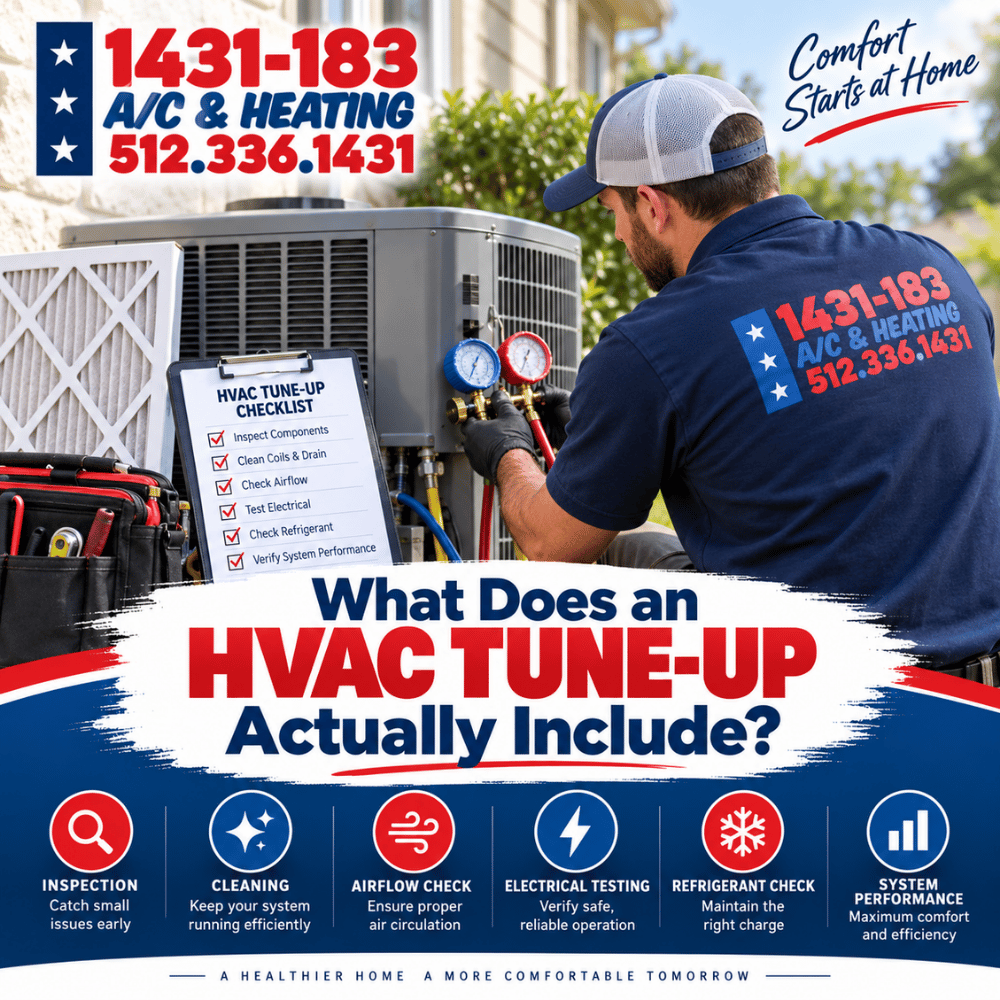
What Is an HVAC Tune-Up?
An HVAC tune-up is a preventive maintenance visit designed to inspect, clean, test, and evaluate your heating or cooling system. Think of it like routine maintenance on your car. You do not wait for the engine to fail before changing the oil or checking the brakes.
Your HVAC system deserves the same kind of attention. During a tune-up, a technician looks for signs of wear, checks important electrical and mechanical components, tests system performance, and identifies anything that could affect comfort, efficiency, or reliability.
Exactly what is included may vary depending on the company, the type of equipment, and whether the technician is servicing your air conditioner, heat pump, or furnace.
What Does an Air Conditioning Tune-Up Include?
During an AC tune-up, a technician will typically inspect several parts of the system.
Checking the Thermostat
The technician should verify that your thermostat is operating properly and communicating correctly with the HVAC system. They may also check thermostat settings to make sure the system is operating as efficiently as possible.
A thermostat problem can sometimes look like an air conditioning problem, so this is an important place to start.
Inspecting Electrical Connections
Air conditioners rely on several electrical components to start and operate. A technician may inspect wiring, electrical connections, relays, contactors, capacitors, and other components for signs of wear, overheating, or damage.
Loose or failing electrical components can cause intermittent problems or eventually prevent the system from starting.
Testing the Capacitor
The capacitor helps provide the electrical boost needed to start motors in your HVAC system. A weak capacitor may allow the system to continue running for a while, but it can eventually lead to a breakdown.
Testing it during routine maintenance gives your technician an opportunity to identify a weakening component before it fails completely.
Checking Refrigerant Performance
Your air conditioner depends on the proper movement of refrigerant to remove heat from your home. A technician may evaluate refrigerant pressures and system temperatures to determine whether the system appears to be operating properly.
Low refrigerant is not something that should normally happen through regular use. If refrigerant is low, there may be a leak or another issue that needs further investigation.
Inspecting the Condenser Unit
The outdoor condenser unit releases heat collected from inside your home. Leaves, grass, dirt, and other debris can collect around the unit and interfere with airflow.
The technician should inspect the condenser coil, fan, cabinet, and surrounding area for conditions that could reduce performance.
Inspecting the Evaporator Coil
The indoor evaporator coil absorbs heat from the air moving through your HVAC system. Dust and debris on the coil can reduce efficiency and make the system work harder.
Depending on the system and accessibility, the technician may inspect the coil for dirt, corrosion, freezing, or other signs of trouble.
Checking the Condensate Drain
Your air conditioner removes humidity from your indoor air, which creates condensation. That water normally drains through a condensate line.
If the drain becomes clogged, water can back up into the system or surrounding area. In some cases, it can cause water damage. Routine maintenance may include checking the drain and making sure condensation can flow properly.
Inspecting the Blower Motor
The blower moves conditioned air through your ductwork and into your home. The technician may inspect the blower motor, wheel, electrical components, and overall operation.
A dirty or struggling blower can reduce airflow and make it harder for your HVAC system to keep your home comfortable.
Checking the Air Filter
A dirty air filter can restrict airflow and force your system to work harder. The technician should inspect the filter and let you know whether it needs to be replaced.
Some maintenance plans may include filter replacement, while others may require the homeowner to provide or purchase the correct filter.
Measuring the Temperature Difference
One way technicians evaluate cooling performance is by comparing the temperature of the air entering the HVAC system with the air coming out. This temperature difference can provide useful information about how effectively the system is cooling. It is only one part of diagnosing system performance, but it can help identify potential problems.
What Does a Heating Tune-Up Include?
Heating maintenance depends on the type of system you have. A heat pump tune-up shares many of the same steps as an air conditioning inspection because the system uses similar components.
A gas furnace requires some additional checks. A furnace tune-up may include:
- Inspecting burners
- Checking ignition components
- Evaluating the flame
- Inspecting the heat exchanger
- Testing safety controls
- Checking electrical connections
- Inspecting the blower system
- Checking the thermostat
- Looking for signs of improper combustion
- Inspecting venting and exhaust components
Because gas furnaces involve combustion, proper inspection is especially important for safety.
Does an HVAC Tune-Up Include Repairs?
Usually, not automatically. A tune-up is primarily an inspection and maintenance service. If the technician finds a damaged capacitor, failing motor, refrigerant leak, or another problem, they should explain what they found and provide recommendations before performing additional repairs.
This distinction is important when comparing HVAC companies. One company’s tune-up price may include certain cleaning or minor maintenance items that another company charges separately. Ask what is included before scheduling service.
Does an HVAC Tune-Up Include Cleaning?
Some cleaning is usually part of a professional tune-up, but the amount of cleaning included varies. For example, a technician may remove debris around the outdoor unit, clean accessible components, or clear a condensate drain.
However, a heavily contaminated evaporator coil, blower assembly, or duct system may require a separate cleaning service. A good HVAC company should clearly explain what is included and tell you if additional work is recommended.
How Long Does an HVAC Tune-Up Take?
The amount of time required depends on the equipment, accessibility, condition of the system, and what the technician discovers. A thorough tune-up generally should not feel like a technician simply walked in, glanced at the equipment, and left.
The goal is to inspect enough of the system to identify potential problems and confirm that the equipment is operating properly. If something unusual is found, the visit may take longer.
How Often Should You Schedule an HVAC Tune-Up?
For most Central Texas homeowners, having the system professionally inspected at least once a year is a good starting point. Because heating and cooling systems both work hard in this part of Texas, many homeowners choose to schedule maintenance twice a year.
That usually means:
- Air conditioning maintenance in the spring
- Heating system maintenance in the fall
Spring maintenance helps prepare your AC for the long cooling season ahead.
Fall maintenance helps make sure your heating equipment is ready before colder weather arrives.
Can an HVAC Tune-Up Prevent Every Breakdown?
No HVAC company can guarantee that routine maintenance will prevent every repair. Mechanical equipment can fail unexpectedly.
However, regular tune-ups give a technician the opportunity to spot worn parts, electrical problems, drainage issues, airflow restrictions, and other warning signs before they cause a complete system failure. That can help reduce the chances of being surprised by a preventable breakdown.
Can an HVAC Tune-Up Lower Your Electric Bill?
It can help, especially if the system has problems that are making it work harder than necessary. Restricted airflow, dirty components, poor electrical performance, thermostat issues, and other problems can reduce efficiency.
Correcting those problems may help the system operate more effectively. However, maintenance cannot make an old or inefficient HVAC system perform like a brand-new high-efficiency unit.
Your energy costs are also affected by insulation, ductwork, thermostat settings, weather, home construction, and the efficiency of the equipment itself.
What Should You Ask Before Scheduling a Tune-Up?
Not every HVAC tune-up is identical.
Before scheduling service, ask the company what is included.
You may want to ask:
- Will you inspect both the indoor and outdoor equipment?
- Do you test electrical components?
- Do you check refrigerant performance?
- Do you inspect the condensate drain?
- Will you check the air filter?
- Is any cleaning included?
- Will I receive recommendations if you find a problem?
- Are repairs included in the tune-up price?
- Are there additional charges I should expect?
A reputable HVAC company should be able to explain exactly what you are paying for.
A Tune-Up Should Give You More Than a Checklist
The real value of HVAC maintenance is not simply checking boxes on an inspection form. It is understanding the condition of your system.
After the tune-up, you should have a clearer idea of how your equipment is performing, whether any components are showing signs of wear, and whether there are problems you should address now or plan for later.
That information helps you make better decisions before you are standing in a hot house with an air conditioner that suddenly stopped working.
If you live in Round Rock or the surrounding Central Texas area and want to have your heating or cooling system inspected, 1431 AC & Heating can help.
Call 1431 AC & Heating at (512) 336-1431 to schedule HVAC maintenance or service.
